7 ways to speed up order fulfilment without hiring
As orders grow, fulfilment is usually the first thing to buckle — and the instinct is to hire. But most brands can move far more volume with the same team by fixing the process first. Here are seven practical ways to speed up order fulfilment without adding headcount, each with the concrete how-to steps to put it in place this week.
1. Bring every channel into one order queue
Logging into Shopee, Lazada, TikTok Shop and your store separately wastes hours and invites mistakes — an order missed on one tab is an order shipped late. Pull every order into a single queue so your team picks, packs and ships from one screen.
How to do it: connect each sales channel to one inventory or order-management system, then set the unified queue as the single place staff work from — nobody logs into a marketplace to fulfil. Sort the queue by ship-by date or SLA so the most urgent orders surface first, and add simple status flags (new, picking, packed, shipped) so two people never grab the same order. The payoff compounds: one queue also means one place to spot stock problems before they become oversells.
2. Use bin locations
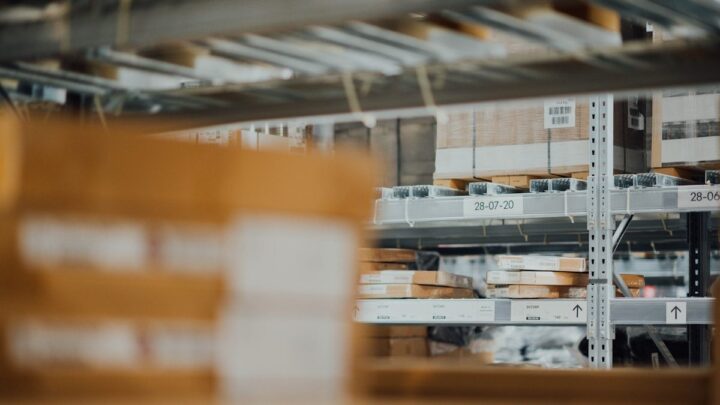
Give every item a clear address (aisle, shelf, bin). Pickers stop hunting and start finding — often the single biggest speed gain in a growing warehouse.
How to do it: label every shelf and bin with a short, logical code (for example A-03-2 for aisle A, bay 3, level 2), record that location against each SKU in your system, and print it on the pick list so a new picker can find any item without asking. Put your fastest-moving SKUs in the most accessible bins near packing, and keep slow movers further out. Review the layout every quarter as your best-sellers shift. Even a basic bin scheme typically cuts pick walking time noticeably from day one.
3. Scan barcodes at picking and packing
Barcode scanning confirms the right item every time, cutting both picking time and the costly errors that cause returns and re-shipments.
How to do it: ensure every product has a scannable barcode (use the supplier’s or generate your own), then scan at two checkpoints — when the item is picked and again when it’s packed against the order. The system flags a mismatch instantly, so a wrong item never leaves the building. Beyond speed, scanning removes the mental load of visual matching, which is where tired staff make the mistakes that trigger a return, a refund and a re-ship — three costs for one error.
4. Batch pick multiple orders
Instead of one order per trip, collect items for several orders in a single pass through the warehouse. Batching dramatically reduces walking time, which is usually the largest hidden cost in fulfilment.
How to do it: group orders into a batch — say, all orders due today, or a cluster that shares popular SKUs — and pick every unit for the batch in one optimised walk, then sort into individual orders at a packing bench. Single-line orders (one item, one order) are ideal to batch together. Keep batches to a size one picker can carry and sort comfortably, and use a cart with dividers so the sort stays clean. For a warehouse doing dozens of small orders a day, batching is often the fastest win after bin locations.
5. Automate carrier labels and tracking
Don’t re-key addresses into carrier sites. Generate labels straight from the order and sync tracking back automatically — to the order and the customer.
How to do it: connect your carriers so a label prints directly from the order with the address already populated, then have the tracking number flow back to the marketplace or store and out to the customer without anyone copying and pasting. Re-keying addresses is slow and it introduces typos that cause failed deliveries and support tickets. Automating the label-and-tracking step removes one of the most repetitive manual jobs in the whole process and keeps buyers informed with no extra effort.
6. Standardise your packing stations
Stock packing stations with right-sized materials and a clear process so packing is fast, consistent and protective of the product.
How to do it: set up each station with a fixed layout — boxes and mailers in a few standard sizes within arm’s reach, tape, filler, the printer and the scanner all in the same spot at every bench. Define a repeatable sequence (scan, pack, weigh, label, done) so any staff member works the same way. Right-sizing packaging speeds up the pack and cuts dimensional shipping costs and damage-related returns. A tidy, well-stocked station means packers never break flow to hunt for a box.
7. Forecast and pre-pick for peaks
Use sales data to anticipate demand and stage popular items before peak events, so the rush doesn’t overwhelm you.
How to do it: look at last year’s peak and recent velocity to identify the SKUs that will spike during events like 11.11, 12.12 or a product launch, then pre-pick or forward-stage those items near packing before the surge hits. Pre-assemble common bundles and kits ahead of time, and make sure reorder points account for the peak so you don’t stock out mid-campaign. Planning the rush turns a chaotic week into a busy-but-manageable one — with the same team.
The common thread: one connected system
Every one of these gains comes from connected systems rather than more people. When inventory, orders and fulfilment live in one place, the manual work that grows with volume simply disappears. The team you have today can handle noticeably more orders once the process stops fighting them.
A worked example
Take a two-person operation shipping about 60 orders a day across Shopify, Shopee and Lazada, currently logging into each platform, picking one order at a time and typing addresses into a carrier site. Say they’re spending roughly six minutes an order end to end — around six hours a day between them, leaving no slack for a busy period. Now apply the fixes: one unified queue removes the platform-hopping; bin locations and batch picking cut the walk; barcode scanning removes error-checking and re-ships; and automated labels remove the address typing. If those changes take the handling time from six minutes to around three, the same two people clear the same 60 orders in roughly three hours — freeing half the day, or absorbing a doubling of volume, with no new hire. The numbers are illustrative, but the direction is what plays out in real warehouses: process beats headcount.
When to outsource instead
Sometimes the fastest way to speed up fulfilment is to stop doing it yourself. If storage is eating your space, peaks keep overwhelming the team, or you’d rather spend time on product and marketing than on picking and packing, outsourcing to a third-party warehouse can be the better move. WhiteBox now offers fulfilment services from a Singapore warehouse — storage, pick and pack, last-mile SG delivery and returns — run by the same company that makes the software, so you keep live visibility of stock and orders right down to the shelf. That single-vendor visibility is the difference between outsourcing and losing control of your operation.
Common mistakes that slow fulfilment down
- Working orders channel by channel. Every extra login is wasted time and a chance to miss an order — unify the queue first.
- Storing stock with no fixed locations. Without bin addresses, pickers rely on memory, and speed collapses the moment a new hire or a new SKU arrives.
- Skipping the pack-side scan. Scanning only at picking still lets a wrong item slip into the box; verify at packing too.
- Re-keying addresses by hand. It’s slow and it causes failed deliveries — automate labels and tracking.
- Treating peaks as a surprise. The events are on the calendar; pre-pick and set reorder points before the rush, not during it.
How WhiteBox helps
WhiteBox unifies orders from every channel into one queue with barcode picking, packing verification and automated carrier labels — so you fulfil more without hiring more. And when you’re ready to hand it off, we run our own Singapore fulfilment warehouse too. Read our fulfilment guide, explore fulfilment services in Singapore, or start a free 14-day trial.
Frequently asked questions
How can I speed up fulfilment without hiring? Unify orders into one queue, use bin locations and barcode scanning, batch pick, and automate carrier labels — process gains that scale without headcount.
What slows fulfilment down most? Disconnected channels and manual data entry — logging into each platform and re-keying addresses wastes the most time.
Does batch picking really make a difference? Yes — walking is usually the biggest hidden cost in a warehouse, and collecting items for several orders in one pass cuts that time sharply, especially for high volumes of small orders.
When should I outsource fulfilment instead of fixing my own process? When space, peaks or your own time have become the bottleneck. Outsourcing to a 3PL like WhiteBox’s Singapore warehouse frees your team while keeping live stock and order visibility.
Do I need a warehouse management system to do this? Not a heavy one — a connected inventory and order platform with bin locations, scanning and carrier integration delivers most of these gains for a growing SME.
Related reading: The pick, pack and ship workflow · Warehouse management basics · Fulfilment services in Singapore.