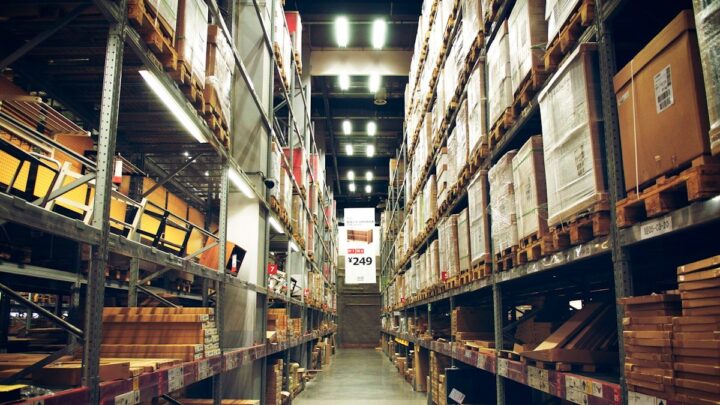
B2B and Distribution: Operations That Scale

B2B distribution looks deceptively similar to retail from the outside: you buy stock, you store it, you sell it. But the moment you start selling to other businesses rather than to individual shoppers, the operating model shifts underneath you. Order sizes balloon, every customer expects their own pricing, and a single mistake on a multi-pallet order costs far more than a wrong T-shirt size. This guide walks through what makes b2b distribution operationally distinct, how to build pricing and catalogues that scale, how to keep stock honest across multiple locations, and the disciplines that let a growing distributor handle more volume without hiring proportionally more people.
How B2B differs from retail
Retail is a high-volume, low-value-per-order game built around consumers who pay up front, expect instant fulfilment, and rarely negotiate. B2B distribution inverts most of those assumptions. Your customers are other businesses placing larger, more predictable orders, often on credit terms, and they expect a relationship rather than a transaction.
The practical differences compound quickly. A retail order might be one or two units; a distribution order might be fifty cartons across a dozen SKUs. Retail pricing is public and fixed; in b2b distribution, the same product can carry three different prices depending on who is buying. Retail customers self-serve at checkout; B2B buyers often re-order the same basket weekly, want to see their negotiated price, and need a purchase order number on the invoice. Fulfilment is heavier too: you are picking by the case or pallet, scheduling deliveries, and sometimes consolidating shipments to save on freight.
Because order values are higher, accuracy matters more. A picking error in retail annoys one shopper. The same error in distribution can stall a customer’s own production line or shop floor, damaging a commercial relationship you spent months building. That is why scaling a distribution business is less about selling more and more about removing friction and error from every repeated step.
Price tiers and catalogues
The single biggest operational difference in B2B is pricing. You rarely sell at one price. Instead you maintain price tiers, customer-specific agreements, volume break points, and sometimes promotional pricing layered on top. A small independent shop pays one rate; a regional chain that commits to volume pays another; a long-standing wholesale partner has a contract price that overrides both.
Managing this in spreadsheets is where most growing distributors come unstuck. The challenge is not setting the prices once, it is keeping them correct as costs move, as customers renegotiate, and as your catalogue grows. A clean approach has three layers:
- A base catalogue with your standard or list price for every SKU.
- Price tiers (for example, Tier A, B and C) that apply a consistent rule across a group of customers.
- Customer-specific overrides for negotiated accounts, which take precedence over the tier.
You may also need separate catalogues entirely: a customer in one segment might not even be allowed to see products meant for another. The system you use should resolve the correct price automatically when an order is placed, so your sales team is not looking up agreements by hand or, worse, quoting from memory.
Multi-location stock
Distributors rarely hold everything in one place. You might run a main warehouse, a satellite depot closer to key customers, and stock in transit between them. Each location needs its own accurate count, and you need a consolidated view across all of them to make sensible decisions.
Multi-location stock raises questions retail rarely faces. When a customer orders, which warehouse fulfils it, the nearest, the one with full availability, or the one that minimises split shipments? When one site runs low, do you raise a purchase order or transfer stock internally? Internal transfers are their own small fulfilment process: stock leaves one location, sits in transit, and arrives at another, and your records must reflect each stage so you never promise inventory that is physically somewhere else.
Done well, multi-location control lets you position stock closer to demand, reduce delivery times and freight costs, and avoid the classic trap of one warehouse overflowing while another stocks out of the same item.
Order and fulfilment at scale
As order volume grows, the warehouse becomes the bottleneck. The fix is rarely more staff; it is better flow. A unified order queue that shows every order, its priority, its allocated stock and its fulfilment status keeps the team working from one list rather than chasing emails and PDFs.
Barcode-driven picking and packing is the workhorse here. Scanning each item against the order catches the wrong-SKU and wrong-quantity errors before they leave the building, which in b2b distribution is exactly where errors are most expensive. For large orders, picking by route or by customer, then verifying at pack, turns a chaotic floor into a predictable line. Consolidating multiple orders for the same customer into one despatch saves freight and gives the customer a cleaner delivery.
Keeping one source of truth
Most distribution pain traces back to the same root cause: stock figures live in more than one place and disagree. The sales team quotes from one number, the warehouse works from another, and the accounts team reconciles a third at month end. Each disagreement creates oversells, backorders and awkward conversations.
A single source of truth means every channel, location and team reads from and writes to the same live inventory record. When a sales order is confirmed, available stock drops everywhere at once. When goods arrive, the count rises everywhere at once. With real-time stock sync across channels like Shopify, Lazada, Shopee, Amazon and TikTok Shop, a distributor running both wholesale and online retail keeps a single honest figure rather than a dozen drifting copies. An open API lets you feed that same truth into accounting, your customers’ procurement systems and your reporting, so nobody is exporting spreadsheets to stay in step.
Worked example
Consider a mid-sized distributor of packaged food products supplying cafes and grocers across the region. They hold stock in a central warehouse in Singapore and a smaller depot upcountry, and they also run a small online store for independent customers.
A regional cafe chain places a standing weekly order: 40 cartons across 15 SKUs. Because this customer sits on Tier A pricing with two negotiated overrides on their highest-volume lines, the order needs the correct price resolved line by line. Here is how a well-run operation handles it:
- The order enters the unified queue. Pricing is applied automatically: Tier A rates for most lines, the two contract overrides where they apply.
- The system checks availability across both locations. Twelve SKUs are fully covered by the central warehouse; three are short there but available at the depot.
- Rather than splitting into two deliveries, the operations lead raises an internal transfer to bring the three short SKUs to the central warehouse ahead of the despatch day.
- Pickers work the order by scanning each carton against the order, so a near-identical SKU cannot slip through.
- The packed order is consolidated into one despatch, and the live stock figure drops across every channel, so the online store cannot oversell the same items.
The outcome is one clean delivery, correct pricing without manual lookup, and no oversell on the consumer channel, all from the same set of records.
Common mistakes
- Running pricing in spreadsheets. As soon as you have more than a handful of negotiated accounts, manual price lists fall out of date and quotes drift from agreements.
- Treating each warehouse as a separate business. Without a consolidated view, you stock out in one location while overstocking the same item in another.
- Confirming orders before checking real availability. Promising stock you cannot ship erodes trust faster than almost anything else in b2b distribution.
- Skipping scan verification on large orders. The bigger the order, the higher the cost of a single wrong line, yet this is exactly where teams cut corners to save time.
- Letting the online channel and wholesale stock disagree. Two sets of numbers guarantee an eventual oversell.
- Ignoring internal transfers as a fulfilment process. Stock in transit that is not tracked becomes stock you double-promise.
How WhiteBox helps
WhiteBox is built for exactly this mix of wholesale and retail complexity. It handles price tiers and customer-specific catalogues, so the right price is resolved automatically on every order. Multi-warehouse stock and internal transfers keep each location accurate and consolidated, while barcode picking and packing and a unified order queue let a small team fulfil large, repeating orders without errors creeping in. Real-time stock sync across major channels and an open API keep one source of truth across your whole operation, and you get forecasting and reporting on top.
It is designed to be quick to adopt, with pricing from S$49 per month, unlimited users and a 14-day free trial, and most teams are live within an afternoon. If you want to see how it fits your distribution model, take a look at our pricing or get in touch for a walkthrough.
Frequently asked questions
What is the difference between B2B distribution and wholesale? The terms overlap heavily. Wholesale usually describes selling goods in bulk to resellers, while distribution often adds logistics, multi-location stock and delivery into the mix. In practice most distributors do both, which is why they need systems that handle tiered pricing and multi-warehouse fulfilment together.
How do I manage different prices for different customers? Build a base catalogue with list prices, layer price tiers over groups of customers, and add customer-specific overrides for negotiated accounts. The key is having a system that resolves the correct price automatically at order entry rather than relying on staff to look it up.
Can I run both wholesale and an online store from the same stock? Yes, and you should. The risk is two channels reading different stock figures and overselling. A single source of truth with real-time sync across channels means your wholesale orders and your online store always draw from the same live count.
How do internal stock transfers work? A transfer moves stock from one location to another. Good practice tracks three stages, leaving the source, in transit, and received at the destination, so inventory is never counted in two places at once or promised while it is on the road.
Do I need barcode scanning for B2B orders? It is strongly recommended once order sizes grow. Scanning each line against the order catches wrong-SKU and wrong-quantity mistakes before despatch, which matters most in distribution where a single error can disrupt a customer’s own operations.
Want the operation handled for you? WhiteBox provides B2B distribution services from our Singapore warehouse — carton and pallet delivery with repackaging, relabelling and kitting done in-house.
Related reading: Retail operations guide, Solutions for distributors, and How to scale retail operations.