
WhiteBox vs NetSuite: Which Fits Your Business? (2026)
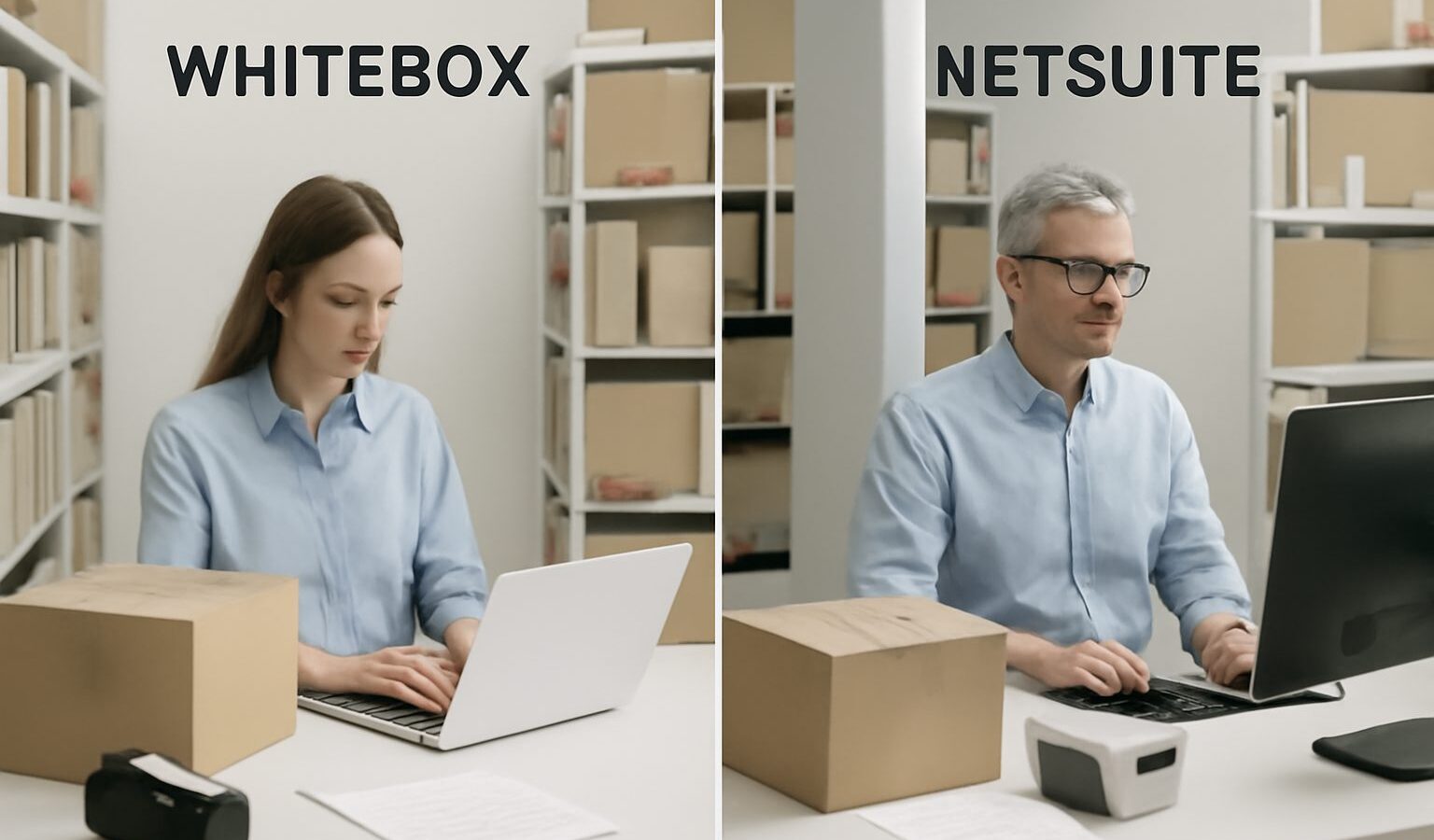
Comparing WhiteBox vs NetSuite is really comparing two categories of software: a focused, fast inventory and retail-operations platform against a full enterprise resource planning (ERP) suite. Both can run stock and orders, but they ask very different things of your budget, your timeline and your team. This guide sets out what NetSuite does well, what WhiteBox does well, and how to judge which fits a business at your stage without overbuying or underbuying.
WhiteBox vs NetSuite at a glance
| Factor | WhiteBox | NetSuite |
|---|---|---|
| Type of offering | Focused inventory and retail-ops software, plus own SG 3PL | Full cloud ERP suite (financials, inventory, CRM and more) |
| Best for | SMB and mid-market omnichannel retailers | Larger, complex enterprises needing one ERP across functions |
| Channels / integrations | Shopify, Lazada, Shopee, Amazon, TikTok Shop; open API | Broad, extensible; often via connectors and partners |
| Setup time | Live within an afternoon | Typically a multi-month implementation with a partner |
| Fulfilment | Software plus in-house Singapore warehouse and last-mile | Software only; integrates with external 3PLs |
| Pricing | From S$49 (about US$38)/month, unlimited users | Quote-based; enterprise-level, confirm at the time of writing (July 2026) |
What NetSuite does well
NetSuite, owned by Oracle, is one of the most established cloud ERPs in the world, and for good reason. It unifies financials, inventory, order management, CRM, and often e-commerce and more inside a single system with deep configurability. For a larger organisation with multiple entities, complex accounting, intercompany transactions and a need for one platform across many departments, NetSuite is a serious, capable choice. If your requirements genuinely span the whole business and you have the budget and internal resource to implement and maintain an ERP, NetSuite is honestly a strong fit and you may be right to invest in it.
What WhiteBox does well
WhiteBox does not try to be an ERP. It does one family of jobs extremely well: giving retailers a real-time source of truth for stock, orders and fulfilment across every channel. That means real-time sync across Shopify, Lazada, Shopee, Amazon and TikTok Shop, multi-warehouse stock and transfers, barcode picking and packing, a unified order queue, forecasting, reporting, an open API and unlimited users, all from S$49 (about US$38) per month and live within an afternoon. It also runs its own Singapore warehouse and last-mile delivery, so software and fulfilment share one live view. For a focused inventory need, that is a faster, cheaper path than standing up a full ERP.
Scope: focused tool versus full ERP
The central trade-off is scope. An ERP like NetSuite is powerful precisely because it touches everything, but that breadth brings cost, complexity and a longer road to value. A focused platform like WhiteBox is limited by design, and that limitation is the point: you get the inventory and fulfilment answer quickly without configuring modules you will not use. The right choice depends on whether your pain is genuinely enterprise-wide or specifically about stock and orders.
Cost and total ownership
NetSuite is quote-based and priced at enterprise level, and the licence is only part of the picture; implementation, connectors, customisation and ongoing administration all add up. WhiteBox starts from S$49 (about US$38) per month with unlimited users and no implementation project to fund. Model the full cost over three years, including people and setup, not just the monthly line. For many SMB and mid-market retailers, the difference is large enough to be decisive on its own.
Setup time and effort
WhiteBox is designed to be live within an afternoon: connect your channels, import products and opening stock, and start selling against one live figure. NetSuite implementations are typically multi-month projects run with a partner, involving requirements gathering, configuration, data migration and testing. That effort can be entirely worthwhile for a complex enterprise, but it is real, and it is a poor fit for a growing retailer that needs accurate marketplace stock next week.
The fulfilment difference
WhiteBox runs its own Singapore warehouse offering storage, pick and pack, last-mile SG delivery, returns, repackaging, kitting and B2B distribution, with the 3PL and the software as one company for live visibility. NetSuite is software that integrates with external logistics providers; the warehouse is always someone else’s system. If you want inventory software and fulfilment from one accountable partner, that is a clear WhiteBox advantage.
A worked example: a scaling brand choosing its stack
Consider “Marina Goods”, an illustrative Singapore brand at S$8m revenue selling across Shopee, Lazada, TikTok Shop and its own Shopify store, with straightforward accounting handled by a standard accounting package. Its pain is not consolidated financials across subsidiaries; it is real-time stock across channels and outsourcing the warehouse as volume grows. NetSuite could do the job, but it would be a heavy, expensive way to solve a focused problem. WhiteBox connects the channels in an afternoon, keeps one live stock figure, and offers its own warehouse when the back room fills up, at a fraction of the cost and effort. Were Marina Goods instead a multi-entity group needing unified financials, the answer might well tip toward an ERP.
Common mistakes when comparing WhiteBox vs NetSuite
- Buying an ERP for an inventory problem. Full ERP is overkill if your real need is stock and order sync.
- Ignoring implementation cost. The licence is only part of an ERP’s true total cost of ownership.
- Underestimating time to value. A multi-month rollout may not fit a retailer that needs accuracy now.
- Forgetting fulfilment. If you will outsource the warehouse, a combined software-and-3PL option matters.
- Not planning for growth either way. Choose for your realistic next two years, not a hypothetical enterprise future.
Which should you choose?
Choose NetSuite if you are a larger or complex organisation that genuinely needs one ERP across financials, inventory, CRM and more, and you have the budget and resource to implement it. Choose WhiteBox if your priority is accurate, real-time inventory and fulfilment across Southeast Asian marketplaces, you want unlimited users on a predictable plan, and you would rather be live in an afternoon than run a multi-month project.
How WhiteBox helps
WhiteBox gives retailers one real-time source of truth for stock, orders and fulfilment across every channel, with multi-warehouse control, barcode pick and pack, a unified order queue, forecasting, an open API and unlimited users from S$49 (about US$38) per month. It also runs its own Singapore warehouse and last-mile delivery, so you can outsource fulfilment while keeping live visibility, without an enterprise ERP project. A 14-day free trial is available and most teams are live within an afternoon. See pricing or start a free trial.
Frequently asked questions
Is WhiteBox an ERP like NetSuite? No. NetSuite is a full ERP spanning financials, inventory, CRM and more. WhiteBox is a focused inventory and retail-operations platform, which makes it faster and cheaper to deploy for stock and fulfilment needs.
Which is cheaper, WhiteBox or NetSuite? WhiteBox starts from S$49 (about US$38) per month with unlimited users. NetSuite is quote-based at enterprise level with implementation costs on top; confirm current pricing at the time of writing (July 2026).
How long does each take to set up? WhiteBox is designed to be live within an afternoon. NetSuite is typically a multi-month implementation run with a partner.
Can WhiteBox handle my accounting? WhiteBox focuses on inventory, orders and fulfilment and connects to accounting tools via its open API, rather than replacing a full accounting or ERP suite.
Does WhiteBox include fulfilment? Yes. WhiteBox runs its own Singapore warehouse and last-mile delivery, so software and 3PL are one company. NetSuite integrates with external logistics providers instead.
Related reading: Best Inventory Management Software in Singapore, WhiteBox vs Odoo Inventory, The Inventory Management Guide, WhiteBox Pricing.


