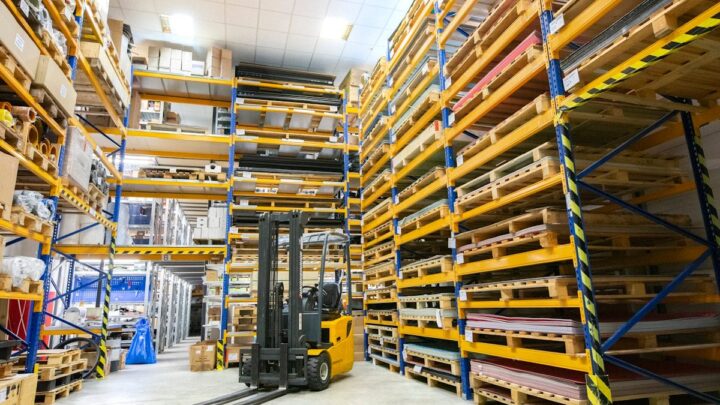
Warehouse Management Systems: Features, Costs and Alternatives

Warehouse management systems are the software that runs a warehouse — tracking every item from the moment it arrives to the moment it ships. If you are weighing up whether to invest in one, this guide walks through what a WMS actually does, the features that matter, what it costs, and the lighter alternatives that suit many growing brands and retailers in Singapore and Southeast Asia better than a full enterprise rollout.
What warehouse management systems do
A warehouse management system coordinates the physical flow of goods through a facility: receiving, putaway, storage, picking, packing and dispatch. It tells staff where to store incoming stock, where to find items for an order, the most efficient route to pick them, and confirms each step by barcode scan. The result is fewer errors, faster throughput and inventory you can actually trust.
The core promise is accuracy. When every movement is scanned and recorded in real time, you stop guessing what is on the shelf and start knowing. That single shift — from estimate to certainty — is what justifies the investment for most operations.
Core features to expect
- Receiving and putaway: scan goods in against a purchase order and direct them to the right location.
- Directed picking: guide pickers along efficient routes with barcode confirmation to cut walking and mis-picks.
- Packing and dispatch: verify order contents, generate labels and confirm shipment.
- Multi-warehouse and transfers: manage several locations and move stock between them with full visibility.
- Cycle counting: count sections continuously rather than shutting down for an annual stocktake.
- Real-time inventory: a live, accurate picture of what is where, down to the bin.
- Reporting: throughput, accuracy, ageing stock and labour productivity.
Cloud vs on-premise deployment
Traditional warehouse management systems were installed on local servers, which meant hardware, IT staff and slow, expensive upgrades. Cloud-based systems changed that. They run in a web browser, update automatically and connect easily to your sales channels and couriers. For most Singapore brands, cloud is the sensible default: lower upfront cost, no server to maintain, and access from any device on the floor.
On-premise still has a place in very large, highly customised operations or where data-residency rules demand local hosting. But for the majority, the speed and simplicity of cloud outweigh the control of self-hosting.
A worked example: the cost of inaccuracy
Consider a distributor holding 4,000 SKUs across two warehouses, picking by paper lists. (These numbers are illustrative.) Suppose mis-picks run at three in every hundred orders. On 1,200 orders a month that is 36 wrong shipments — each one triggering a customer complaint, a return, a re-pick and a re-ship. If each error costs roughly S$25 in labour, freight and goodwill, that is around S$900 a month, or over S$10,000 a year, lost to a problem barcode scanning largely eliminates.
Now add the hidden cost: staff time spent hunting for stock the paper system says exists but cannot be found. A warehouse management system removes both leaks at once by making every movement scanned and visible. The payback is rarely about one big saving — it is many small ones compounding.
What warehouse management systems cost
Pricing spans a wide range. Enterprise systems are quote-based and can run into tens of thousands of dollars a year once implementation, training and per-user licensing are added. Mid-market cloud tools sit lower but often charge per user, which adds up as your warehouse team grows. At the time of writing (June 2026), comparable cloud inventory platforms range from around US$39 per user per month to several hundred dollars a month for the inventory-focused tiers of larger suites.
Watch for the costs that hide outside the headline price: implementation fees, integration charges, per-user licensing, hardware (scanners and printers) and support tiers. A cheap subscription with expensive add-ons can cost more than a higher flat fee that includes everything.
Lighter alternatives to a full WMS
Not every business needs a heavyweight, enterprise warehouse management system. If you run one or two warehouses, sell across marketplaces and want accurate stock without a six-month rollout, a modern cloud inventory and fulfilment platform often does the job for far less. These tools bundle barcode picking and packing, multi-warehouse stock, transfers and a unified order queue — the practical heart of warehouse management — without the enterprise price tag or implementation drag.
The decision usually comes down to complexity. Deeply customised slotting, labour management and conveyor integration point towards a dedicated WMS. Accurate stock, smooth picking and multi-channel order fulfilment point towards a lighter platform that goes live in an afternoon.
Common mistakes when choosing
- Buying for the warehouse you imagine, not the one you run. Match the tool to today’s complexity plus realistic near-term growth.
- Ignoring per-user pricing. A low base fee can balloon once your whole floor team needs logins — look for unlimited users.
- Underestimating implementation. The software is only half the project; data migration and training are the rest.
- Skipping channel integration. A WMS that does not sync to your Shopify, Lazada or Shopee store leaves you reconciling by hand.
- Forgetting the scanners. Directed picking needs hardware; budget for it from the start.
- Chasing features you will never use. Pay for what removes your real bottleneck, not the longest spec sheet.
How WhiteBox helps
WhiteBox gives growing brands and retailers the practical core of a warehouse management system without the enterprise weight. It provides multi-warehouse stock and transfers, barcode picking and packing, and a unified order queue, all syncing in real time across Shopify, Lazada, Shopee, Amazon and TikTok Shop. With unlimited users, pricing from S$49 (about US$38) per month and a system that goes live within an afternoon, it suits Singapore and Southeast Asian operations that want accuracy and speed without a long rollout. See pricing or start a 14-day free trial to test it against your own picking.
Frequently asked questions
What is the difference between a WMS and inventory software? Inventory software tracks stock levels and value; warehouse management systems add the physical processes — directed picking, putaway and packing — that move goods through a facility accurately.
Do I need a WMS if I only have one warehouse? Not necessarily a full enterprise one. A single warehouse usually runs well on a cloud platform with barcode picking and real-time stock, which gives most of the benefit at a fraction of the cost.
How much do warehouse management systems cost? They range from per-user cloud subscriptions to large quote-based enterprise deals. Lighter platforms like WhiteBox start from S$49 per month with unlimited users.
Can a WMS connect to my online stores? Good cloud systems sync directly with marketplaces and webstores so stock and orders stay aligned. Always confirm which channels are supported before buying.
How long does it take to go live? Enterprise rollouts can take months; modern cloud platforms can be operational within an afternoon, with picking accuracy improving as soon as your team starts scanning.
Related reading: Order Fulfilment in Singapore, Warehouse Control System Software, WMS Requirements and WMS Software for Small Business.