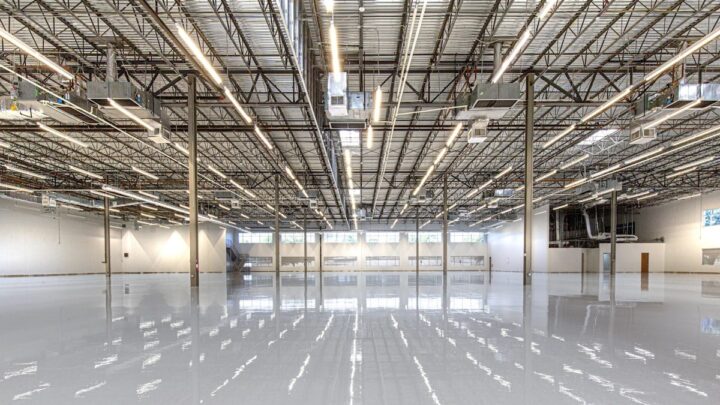
Warehouse Automation Statistics (2026)

Warehouses are automating faster than at any point in the history of the industry, and the numbers explain why: a punishing labour shortage, e-commerce order profiles that manual operations cannot keep up with, and robotics that finally pay back within a realistic horizon. This page collects the most useful warehouse automation statistics for 2026 — market size and growth, robotics and mobile-robot adoption, warehouse management system (WMS) uptake, productivity gains, and the Asia-Pacific and Singapore data that matters most for operators in our region. Every figure below is drawn from published research and cited inline with a named, linked source and its data year.
Top statistics
- The global warehouse automation market was worth about US$29.98 billion in 2025 and is forecast to reach US$65.74 billion by 2031, a 13.98% CAGR (Mordor Intelligence, 2026).
- The Asia-Pacific warehouse automation market is projected to grow from US$14.18 billion (2025) to US$38.57 billion by 2031, a 17.31% CAGR — faster than the global rate (Mordor Intelligence, 2025).
- Singapore has the world’s second-highest robot density at 818 robots per 10,000 employees (2024), behind only South Korea (International Federation of Robotics, 2025).
- 41% of supply-chain organisations already use AI and 47% plan to within five years (MHI Annual Industry Report).
- 63% of warehouse leaders plan to integrate AI software within five years (Zebra Warehousing Vision Study, 2024).
- Around 2.4 million US manufacturing jobs are expected to go unfilled by 2028 — a leading driver of automation investment (MHI Annual Industry Report, 2024).
- Worldwide retail e-commerce sales reached US$6.334 trillion in 2024, or 20.1% of all retail — the first time online passed the 20% mark (eMarketer, 2024).
- Southeast Asia’s digital economy hit US$263 billion in gross merchandise value in 2024, up 15% year on year, with e-commerce the largest driver (Google, Temasek & Bain e-Conomy SEA, 2024).
- DHL reports that autonomous mobile robots roughly doubled picking productivity in its order-fulfilment operations (Trax Technologies on DHL, 2025).
- The global WMS software market is forecast to grow from US$4.04 billion (2025) to US$10.89 billion by 2031, a 17.98% CAGR (Mordor Intelligence, 2026).
Warehouse automation market size and growth
- The global warehouse automation market stood at about US$29.98 billion in 2025, rising to roughly US$34.17 billion in 2026 and a forecast US$65.74 billion by 2031 (13.98% CAGR) (Mordor Intelligence, 2026).
- An alternative forecast puts the market at US$25.27 billion in 2025 reaching US$107.36 billion by 2035, a 15.56% CAGR (Precedence Research, 2025).
- Logistics-specialist analysts estimate the market will reach US$55 billion by 2030 at a 15% CAGR, driven by e-commerce and supply-chain transformation (LogisticsIQ, 2024).
Robotics, AMRs and AGVs
- The autonomous mobile robot (AMR) market is projected to grow from US$2.39 billion (2025) to US$7.07 billion by 2032, a 14.4% CAGR (MarketsandMarkets, 2025).
- A second estimate puts the AMR market at US$4.49 billion (2025) rising to US$10.56 billion by 2031, a 15.31% CAGR (Mordor Intelligence, 2026).
- Global mobile-robot revenue was about US$5 billion in 2024 and is forecast to reach US$14 billion by 2030 (roughly 19% CAGR), outpacing fixed automation (Interact Analysis, 2024).
- Analysts trimmed the mobile-robot five-year CAGR from 26% down to 21% (2025–2030) amid economic and tariff uncertainty — a useful reminder that adoption is not a straight line (Interact Analysis, 2025).
- Within mobile robotics, AGV/conveyor shipment growth was revised from a 6% to a 4% CAGR, while person-to-goods robot revenues are still forecast to grow around 30% a year to 2030 (Interact Analysis, 2025).
WMS and AI in the warehouse
- The warehouse management system market is forecast to grow from US$4.04 billion (2025) to US$10.89 billion by 2031 at a 17.98% CAGR — outpacing physical automation hardware (Mordor Intelligence, 2026).
- 41% of supply-chain organisations currently use AI, with a further 47% planning to adopt it within five years (MHI Annual Industry Report).
- 35% of organisations already use robotics and automation, and 38% plan to implement it within the next five years (MHI Annual Industry Report).
- 63% of warehouse decision-makers plan to integrate AI software within five years, and 85% of associates believe technology investments are necessary to meet business objectives (Zebra Warehousing Vision Study, 2024).
Automation adoption and investment intent
- 64% of warehouse operators intend to increase spending on modernisation over the next five years (Zebra Warehousing Vision Study, 2024).
- 55% of firms are increasing supply-chain technology investment; of those, 88% plan to invest over US$1 million and 42% over US$10 million (MHI Annual Industry Report, 2024).
- In an earlier benchmark, 46% of operators cited faster delivery to end-customers as the primary factor driving warehouse growth plans (Zebra Warehousing Vision Study, 2019).
The labour shortage driving automation
- Around 2.4 million US manufacturing jobs are expected to go unfilled by 2028, repeatedly cited as a top driver of warehouse automation (MHI Annual Industry Report, 2024).
- The US warehousing and storage industry employed about 1.04 million workers with an average salary near US$42,093 in 2024, showing the scale of labour exposed to rising wage pressure (Data USA (BLS/Census), 2024).
- 73% of companies believe human capabilities must keep pace with technology, yet only 9% report making progress aligning the two (Deloitte via MHI Annual Industry Report, 2025).
Productivity and accuracy gains
- DHL reports that Locus autonomous mobile robots roughly doubled picking productivity in its order-fulfilment operations (Trax Technologies on DHL, 2025).
- DHL committed US$737 million to deploy 1,000 additional robots across its UK and Ireland operations under its Strategy 2030 programme (Trax Technologies on DHL, 2025).
- Boston Dynamics “Stretch” unloading robots can handle up to 700 packages an hour, lifting parcels of up to 23kg (Trax Technologies on DHL, 2025).
E-commerce as the automation engine
- Worldwide retail e-commerce sales reached US$6.334 trillion in 2024 (eMarketer, 2024).
- E-commerce made up 20.1% of total retail sales in 2024, the first year online surpassed the 20% milestone (eMarketer, 2024).
- Southeast Asia’s digital economy reached US$263 billion in GMV in 2024, up 15% year on year, with e-commerce the single largest contributor (Google, Temasek & Bain e-Conomy SEA, 2024).
- Video commerce now accounts for about 20% of SEA e-commerce GMV, up from under 5% in 2022 — reshaping order profiles and returns (Google, Temasek & Bain e-Conomy SEA, 2024).
- The SEA digital economy generated US$89 billion in revenue (+14%) and US$11 billion in profit (+24%) in 2024, signalling that regional operators can now fund automation (Google, Temasek & Bain e-Conomy SEA, 2024).
Asia-Pacific and Southeast Asia warehouse automation statistics
- The Asia-Pacific warehouse automation market is forecast to grow from US$14.18 billion (2025) to US$38.57 billion by 2031, a 17.31% CAGR (Mordor Intelligence, 2025).
- Within APAC, China holds about 56.83% of regional revenue (2025) while India is the fastest-growing country market at an 18.56% CAGR (Mordor Intelligence, 2025).
- The Southeast Asia warehouse automation market is projected to grow from US$0.81 billion (2025) to US$1.63 billion by 2031, a 12.36% CAGR (Mordor Intelligence, 2025).
- China installed 295,000 industrial robots in 2024 — 54% of all robots installed worldwide — at a robot density of 166 per 10,000 employees (+17%) (International Federation of Robotics, 2025).
- Asia’s regional average robot density reached 131 robots per 10,000 employees, up 11% (International Federation of Robotics, 2025).
- China’s share of the global mobile-robot market is expected to fall from 58% (2024) to 46% by 2030 as adoption broadens across other regions (Interact Analysis, 2024).
Singapore warehouse automation and robot density
- Singapore has the world’s second-highest robot density at 818 robots per 10,000 employees (2024), growing about 13% a year since 2019 — behind only South Korea’s world-leading 1,220 (International Federation of Robotics, 2025).
- Singapore transport-sector job vacancies rose to 3,800 in Q3 2024 from 2,800 a year earlier, while median sector wages climbed 5.4% in 2023 — tightening conditions that push operators toward automation (Mordor Intelligence, 2024).
- With the foreign-worker quota ceiling held at 38% of headcount, one Singapore operator (SATS) reported that autonomous mobile robots cut manual cargo handling by 30% (Mordor Intelligence, 2024).
- Singapore’s freight and logistics market was worth about US$24.53 billion in 2025 and is forecast to grow at a 6.26% CAGR to 2031, underpinning warehouse demand (Mordor Intelligence, 2025).
How WhiteBox helps
Automation only pays off when the software layer keeps every order, SKU and warehouse in sync in real time. WhiteBox gives brands and retailers across Southeast Asia one source of truth for stock and orders — with multi-warehouse control, barcode picking and packing, and a unified order queue that automated fulfilment can plug into. See pricing or start a free trial, and read our guide to order fulfilment in Singapore.
Frequently asked questions
How big is the warehouse automation market in 2026? The global market was about US$29.98 billion in 2025 and is projected to reach roughly US$65.74 billion by 2031 at a 13.98% CAGR, according to Mordor Intelligence (2026). Other firms forecast US$55 billion by 2030 (LogisticsIQ) or over US$100 billion by 2035 (Precedence Research).
How fast is warehouse automation growing in Asia-Pacific? Faster than the global average. The APAC market is forecast to grow from US$14.18 billion (2025) to US$38.57 billion by 2031, a 17.31% CAGR, per Mordor Intelligence (2025).
Why are warehouses automating? The two biggest drivers are labour and e-commerce. Around 2.4 million US manufacturing jobs are expected to go unfilled by 2028 (MHI, 2024), while global e-commerce passed US$6.3 trillion and 20% of retail in 2024 (eMarketer, 2024).
How much does automation improve productivity? Results vary by operation, but DHL reports that autonomous mobile robots roughly doubled picking productivity, and Boston Dynamics unloading robots handle up to 700 packages an hour (Trax Technologies on DHL, 2025).
How automated is Singapore? Highly. Singapore has the world’s second-highest robot density at 818 robots per 10,000 employees, growing about 13% a year (International Federation of Robotics, 2025).
Sources
- Mordor Intelligence — Warehouse Automation Market
- Precedence Research — Warehouse Automation Market
- LogisticsIQ (via PR Newswire) — Warehouse Automation Market to Reach $55 Billion by 2030
- MarketsandMarkets — Autonomous Mobile Robots Market
- Mordor Intelligence — Autonomous Mobile Robot Market
- Interact Analysis — Mobile Robots Market Outpaces Fixed Automation
- Interact Analysis — Mobile Robot Market Forecast Slashed
- Mordor Intelligence — Warehouse Management System Market
- MHI Annual Industry Report — AI and Robotics Powering the Next Generation of Supply Chains
- MHI Annual Industry Report 2024 (via OTTO Motors) — MODEX 2024 Takeaways
- MHI Annual Industry Report 2025 / Deloitte (via Made4net)
- Zebra Warehousing Vision Study 2024 (via Robotics & Automation Magazine)
- Zebra Warehousing Vision Study (2019 edition, targets to 2024)
- Data USA — Warehousing & Storage (BLS/Census data)
- Trax Technologies — DHL’s robot investment and warehouse labour economics
- eMarketer — Worldwide E-commerce Sales Break $6 Trillion
- Google, Temasek & Bain — e-Conomy SEA 2024
- Mordor Intelligence — Asia-Pacific Warehouse Automation Market
- Mordor Intelligence — Southeast Asia Warehouse Automation Market
- Mordor Intelligence — Singapore Freight & Logistics Market
- International Federation of Robotics — World Robotics 2025 (robot density)
Cite us: found these warehouse automation statistics useful? You are welcome to reference them — please credit WhiteBox with a link back to this page so readers can reach the original sources.
Related reading: Order Fulfilment in Singapore (pillar guide), Inventory Management Statistics, 3PL Fulfilment Statistics (Southeast Asia) and Best Inventory Management Software in Singapore.