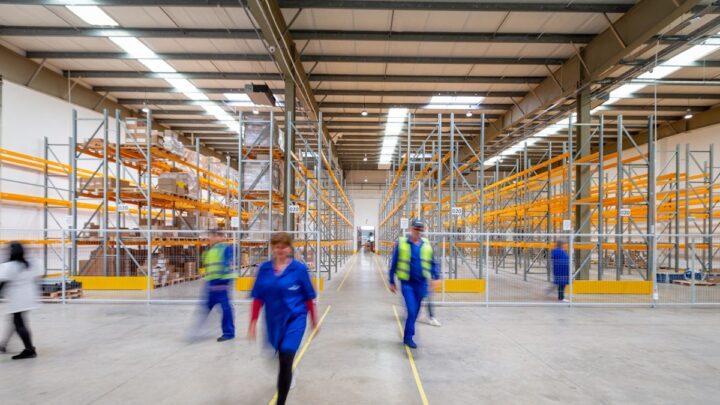
Value-Added Services in 3PL: Repackaging, Relabelling and Kitting

Value-added services in 3PL are the extra warehouse tasks, beyond simply storing and shipping, that a logistics provider can do to your stock: repackaging, relabelling, rebranding, kitting, bundling and quality checks. Done in the same warehouse that holds your inventory, they save you shipping stock elsewhere for a quick change and let you respond fast to new channels, markets and promotions. This guide explains the main value-added services, when each one earns its cost, how they affect your stock and margins, and a worked example, so you can use them deliberately rather than paying for handling you do not need.
What “value-added” really means
Core fulfilment is receive, store, pick, pack, ship. Value-added services (VAS) are everything a warehouse can do to transform or prepare your stock in between, work that adds value or readiness to the product itself. The point of doing it at your 3PL is proximity: the stock is already there, so a relabel or a repack happens in place instead of a costly round trip to a separate facility and back. That makes VAS the practical way to adapt product for a new marketplace, fix a labelling issue, or build a promotional bundle without moving inventory around the island.
The main value-added services and when they help
- Repackaging. Moving product into new or branded packaging, right-sizing boxes, or refreshing damaged outer packaging. Helps when you rebrand, upgrade unboxing, or reduce dimensional shipping cost.
- Relabelling. Applying new labels, barcodes or country-specific information. Helps when entering a new market, meeting a channel’s labelling requirement, or correcting an error without recalling stock.
- Rebranding. Swapping outer packaging or inserts to reflect a new brand or a retailer’s private label. Helps in white-label and reseller arrangements.
- Kitting and bundling. Assembling components into gift sets, multipacks or starter boxes. Helps lift average order value and speed dispatch.
- Quality checks and inspection. Checking incoming stock or returns for defects before they reach customers. Helps protect reviews and reduce costly wrong-item shipments.
- Insert and promotional handling. Adding flyers, samples or gifts-with-purchase to orders. Helps run campaigns without re-handling every order yourself.
Why doing VAS at your 3PL saves money
The alternative to warehouse VAS is handling stock yourself or trucking it to a third party: pulling inventory out, working on it, and putting it back, with transport and delays at each step. When the same warehouse that stores your stock can relabel a batch or repack a range in place, you avoid that movement entirely and the work happens close to dispatch. For a growing brand, that proximity is often the difference between reacting to a new channel requirement in days versus weeks. VAS is not free, but the cost of the labour is usually far less than the cost of moving stock to get the same result.
The impact on stock and margin
Value-added work changes your product, so it changes your inventory records: a relabelled unit, a repacked SKU or an assembled kit may need a new identity in your system, and components consumed by kitting must be decremented accurately. If the warehouse and your inventory software are separate, these transformations are reconciled after the fact and counts drift; if they share a real-time view, the change is reflected as it happens. On margin, VAS is a labour cost per unit or per hour, so price it into the product or promotion it supports rather than treating it as an invisible overhead.
A worked example: entering a new market with relabelling
Consider “Katong Kitchenware”, an illustrative Singapore brand expanding a product line into a neighbouring market that requires local-language labelling. Without warehouse VAS, it would ship pallets back to a packing partner, relabel, and ship them out again, adding cost and a fortnight of delay. Instead, its 3PL relabels the affected stock in place, applies the new barcodes, and updates the SKU records so inventory stays accurate, then the same warehouse handles cross-border dispatch. Katong hits its launch window and avoids double freight. The lesson: when VAS lives in the warehouse that already holds your stock, adapting product for a new channel or market becomes a task, not a project.
Common mistakes with value-added services
- Treating VAS as free. It is labour; price it into the product or campaign it supports.
- Letting records drift. Relabelling, repacking and kitting change SKUs; keep the system in step or counts break.
- Shipping stock out for simple changes. A relabel or repack your 3PL could do in place rarely justifies a round trip.
- Over-customising. Every bespoke variant adds handling and SKU complexity; reserve VAS for where it clearly pays.
- Skipping QC on returns. Restocking returns without inspection risks shipping defective units to the next customer.
- Assuming any 3PL offers it. Confirm the specific services in-house before you rely on them for a launch.
Using VAS deliberately
The brands that get the most from value-added services treat them as a planned capability, not an afterthought: they know which services their 3PL offers in-house, they price the labour into the products and promotions that use it, and they keep their inventory system aligned so every transformation is reflected accurately. Used that way, VAS becomes a lever for speed, entering markets, launching bundles and fixing issues in place, rather than a mysterious line on the invoice. The enabling condition is a warehouse whose operations and your stock records move together.
How WhiteBox helps
WhiteBox provides value-added services at its own Singapore warehouse, repackaging, relabelling, rebranding and kitting, alongside storage, pick and pack, last-mile SG delivery, returns, and B2B carton and pallet distribution. Because the warehouse runs on our own inventory software, a relabel, repack or kit is reflected in your stock records in real time, so your counts stay accurate through every transformation rather than drifting until a month-end reconciliation. We do not publish fixed service rates, because VAS cost depends on the work and your volumes. Tell us what your product needs and we will scope it. See our B2B distribution services, the full services overview, or tell us your volumes.
Frequently asked questions
What are value-added services in 3PL? They are extra warehouse tasks beyond store-and-ship, such as repackaging, relabelling, rebranding, kitting, bundling and quality checks, that prepare or transform your stock in the same warehouse that holds it.
Why do VAS at the 3PL instead of in-house? Because the stock is already there. Doing the work in place avoids pulling inventory out, transporting it and returning it, which saves cost and time, especially when reacting to a new channel or market requirement.
How do value-added services affect my inventory counts? Relabelling, repacking and kitting change SKUs and consume components, so your records must update as the work happens. Shared real-time visibility between the warehouse and your software keeps counts accurate.
Are value-added services expensive? They are a labour cost, charged per unit or per hour, and usually far cheaper than moving stock elsewhere to achieve the same result. Price the work into the product or promotion it supports.
What should I check before relying on VAS? Confirm which services your 3PL performs in-house, how the work is charged, and how it reflects back into your stock records, before you build a launch or campaign around it.
Related reading: Order Fulfilment in Singapore, Kitting and Bundling Services, Order Fulfilment Costs in Singapore, How to Choose a 3PL Partner.